Hi everyone, welcome back to the blog.
We live in a world that loves to hold on.
We hold on to things.
We hold on to titles.
We hold on to roles, habits, expectations, and old versions of ourselves that once made sense but may no longer.
We hold on because it feels safe.
Things give us a sense of control. Titles give us identity. Routines give us predictability. Even worries, regrets, and old stories can feel familiar enough to keep around.
Letting go can feel like stepping into the unknown. And is often framed as losing, as giving up, as failing. But as I sit here in Miri, looking out at a slower, clearer world, I realize we need empty hands to catch something new.
Letting go sounds simple, doesn’t it? In reality, it’s one of the hardest things we ever learn. It gets even tougher as we get older, especially after years of building, collecting, achieving, and proving ourselves.
Letting go isn’t just about clearing out old clothes. It’s a kind of spiritual decluttering. We come with nothing; we leave with nothing. Everything in between is just a temporary loan.
Here’s my reflection on the art of letting go. Not the Instagram version but the real one. The one that’s uncomfortable, emotional, freeing, and deeply rewarding.
My Tempting Two-Year Crossroad: A Story from the Desk
Let me take you back a few months. I was standing at a crossroads that felt both familiar and terrifying.
There it was, sitting on my desk: a renewal of my employment contract. Another two years as a Director for a fantastic investment company.
This wasn’t just any job. I truly loved it. The work was challenging in the best ways; my colleagues were brilliant, and my boss was the best I could ask for. And the perks? They were, in a word, sublime. I’m talking about hotel suites bigger than some apartments, airplane suites that made you forget you were flying, and restaurants where menus didn’t even bother with prices.
My heart was heavy. My mind was racing. I kept asking myself, “Why would I walk away from this? I’m still at the top of my game. I could do this for two more years, easily.”
It felt safe. It felt prestigious. It felt like me.
But I had made a promise to myself. I had decided, firmly, that I would retire before my 66th birthday. And that birthday was just one month away.
The struggle was real. It was the ultimate test of “letting go” before I’d even started writing about it. I wasn’t just letting go of a paycheck; I was letting go of an identity. The title of Director. The influence. The feeling of authority sitting amongst the most important people in a boardroom.
And then, the realization hit me quiet, but firm: sooner or later, this position will not be mine anymore. I cannot hold on to it forever. Whether it was now, in two years, or five, I’d have to let it go eventually. The only difference was when. Holding on would just delay the inevitable. And more importantly, delay my next chapter.
Was I holding on because I loved the work? Or because I was afraid of who I’d be without it? If I’m being completely honest, it was both. But the fear was louder.
With a deep breath and a heart still partly reluctant, I said goodbye to that phase of my life and began preparing to shift gears into retirement.
I didn’t sign the contract.
That decision was my first real, conscious act of decluttering. I wasn’t just clearing my calendar; I was clearing my soul.
The First Layer: The Great Physical Declutter

Before we can get to the “soul” stuff, we usually have to start with the “stuff” stuff.
My closet is a museum of my past lives. Suits from my corporate years that I’ll never wear again, but couldn’t bring myself to donate because “they are expensive.” Dresses from parties I attended over the years. Shoes — oh, the shoes — that hurt my feet but looked fantastic, so I kept them “just in case.”
I know we do that sometimes, even though we all know the “incase” is just wishful thinking. I also know I can’t magically become my 40-year-old self again, who could wear four-inch heels without limping for days 😂
The kitchen is even worse. Gadgets I bought with excitement and only used once. The bread maker. The juicer. The fancy coffee machine from years ago. The Kitchen Aid from baking with the kids. And the cutlery and dinnerware — don’t even get me started. Most of the Portmeirion pieces still have their price tags and sit untouched in the cabinet. Maybe a weekend garage sale will help.
I love reading, especially romance and fantasy novels. I have boxes of books by old favorite authors like Danielle Steele, Nora Roberts, Kathleen Woodiwiss, Judith McNaught, and Dean Koontz. I’ll keep my Dean Koontz collection and newer novels, but the older books are headed to the thrift store.
Do you have any boxes labeled “Misc” in your storeroom? I have three. “Misc” might be the most intimidating word in the English language. It could mean treasure or just junk. I kept meaning to go through them but never did. Maybe opening them would involve making decisions about what I was holding onto and why. Friends, words of advice: if you haven’t opened it in a year, just toss it. No second thoughts!
I know every item can feel like a negotiation. But it gets easier when you ask, “Does this thing serve my life now, or am I serving it?“
Letting go of physical things is often the first crack in the door. It teaches us that nothing terrible happens when we release what no longer serves us. In fact, life feels lighter. Rooms breathe. Minds follow.
Decluttering isn’t about showing off minimalism. It’s about making your space fit your life now, not your past.
Here’s a rule of thumb: If something doesn’t add value to your life now, let it go.

Physical clutter is visible. Mental clutter is insidious.
Mental clutter is harder to spot and even harder to let go of. What are we holding onto? Old grudges, resentment toward people who probably don’t even remember what they did, regrets we replay over and over, and all the “should haves” and “could haves” that keep us up at night.
In investing, there’s a term called “Sunk Cost Fallacy.” It means we keep putting effort into something just because we’ve already invested so much, even when it’s no longer working. We do this with our emotions too, clinging to old hurts or identities because we’ve spent so much time on them.
I carried a lot of mental baggage I didn’t even realize I was lugging around. Old hurts. Ancient arguments. Disappointments from decades past. Failures I’d never forgiven myself for. Relationships that had ended, but somehow I was still energetically tied to, still mentally rehashing, still defending myself in conversations that existed only in my head.
Last Christmas, I was in Hong Kong and met a very fatherly priest (I didn’t have his permission, so I will refrain from mentioning his name). Maybe it was guilt about leaving my family behind on Christmas Day or the feeling that I had drifted away from the Church, but I found myself at a church on Boxing Day afternoon.
At the church, the priest could already tell I wasn’t doing well emotionally and eventually got me talking — really talking — about stuff that happened during my childhood that I thought I had forgotten or forgiven. About regrets. About resenting the responsibilities of being the eldest child. About almost everything that I had locked in the darkest corner of my soul. That was two of the most meaningful hours of my life. I left the church feeling much lighter.
My biggest takeaway from our talk was this: mental decluttering takes time, patience, and kindness toward ourselves.
Start with forgiveness. Not the kind you announce to others, but the quiet, internal kind where you free yourself from resentment.
Forgive people who never apologize. People who don’t think they do anything wrong. People who are long dead and can’t receive your forgiveness, even if you want to give it to them directly.
And then, the hardest part: forgive yourself.
For the job you didn’t take. The relationship you ended. The words you said in anger. The times you weren’t the daughter or mother you wanted to be. The friend you failed. The opportunities you missed because you were too scared, too proud, or too stubborn.
Then, sit with each regret, acknowledge it, learn what you could from it, and then let it go.
Not all at once, of course. This isn’t a one-time event. This is an ongoing process. Some days, you have to forgive the same thing multiple times. Some days old resentments would resurface, and you’d have to gently release them again.
But slowly, gradually, you will feel lighter.
The Ultimate Liberation: Ego and the Illusion of Permanence

The physical clutter was surface-level. The mental clutter went deeper. But the spiritual clutter? That’s the foundation everything else rests on. And this is the hardest layer of all.
And the biggest piece of spiritual clutter we carry is ego — the illusion that we are our titles, our achievements, our possessions, our status.
But none of them follows us out the door.
We come from nothing.
We leave with nothing.
That corner office? It’s someone else’s now. The business cards? Recycled. The wealth we’ve accumulated? We can’t take it with us. The status we’ve gained? It’s meaningless once we’re gone. The title we spent decades earning? Someone else has it now, and in a few years, no one will remember we ever held it.
Permanence is just an illusion. Our job, our house, even our body — they’re not permanent.
Holding on to who we used to be keeps us from fully enjoying who we are now. When we stop trying to be “someone,” we finally get to just be ourselves.
This is what spiritual decluttering is all about. It’s where real peace begins.
Adopting Simplicity: The Reward for Letting Go
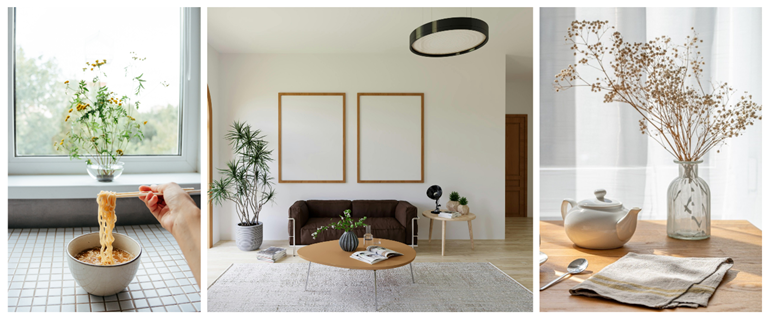
So, what’s on the other side of letting go? Simplicity.
And simplicity is where the joy is.
I have fewer clothes now, but I love every piece I own. I have fewer possessions, but each one serves a purpose or brings me joy. I have fewer commitments, but each one is meaningful.
My calendar isn’t packed. My to-do list isn’t endless. My mind isn’t racing.
Instead, I have space. Space to think. Space to feel. Space to just be.
I wake up without the weight of who I’m supposed to be or what I’m supposed to accomplish. I can spend an entire day reading a book without guilt. I can sit in my garden without my mind running through a mental checklist.
My life is simpler now, but so much richer. A good day isn’t measured by productivity, but by being present. Every day feels full. Enriched.
Like coffee with friends. Nothing fancy. A random roadside coffee shop will do. The requisite for the meet is not the coffee but the bonding, the sharing, and the reconnection. We’ll spend hours reminiscing over that monster of a boss we had years back, over some silly mishaps, or planning a visit to someone we know who isn’t doing so well. I’d never really thought that a simple act of having coffee together would bring so much joy and richness to my life.
Some days I just want to be alone for some “me” time, and that’s perfectly okay. I spoil myself with a body massage or a visit to my manicurist. I enjoy binge-watching good Chinese or Korean dramas, or watching my favorite Korean boy band, BTS, in action. “Me” time can be therapeutic and good for your mental well-being.
Now, my rewards aren’t airplane suites or five-star menus. My rewards are presence, peace, and simplicity.
When we let go of the big things that crowd our lives, we finally have space to notice the small things that make life worth living.
I’m no longer the Director of an investment company. I’m just a woman, standing in the sunlight, finally holding nothing, and because of that, I can finally hold everything.
I can’t take possessions with me, but I can leave behind something far more valuable: a legacy of love and the memory of a life well lived and fully released.
Here’s to lightening our load, in every sense of the word. 🍺Cheers!
To wrap up, I’ll leave you with a 5-day declutter challenge.
The “Empty Hands, Full Heart” 5-Day Challenge
A Journey into the Art of Letting Go
Day 1: The Physical Space
- The Task: Find five items in your home that belong to a “past version” of you—clothes from a job you no longer have, hobbies you no longer enjoy, or “fancy” items you’re saving for a day that never comes.
- The Why: Physical clutter is often a placeholder for an identity we are afraid to let go of. By clearing the space, you tell your brain you are ready for the “now.”
Day 2: The Mental “Sunk Cost”
- The Task: Identify one project, commitment, or even a friendship that you are maintaining only because you’ve “already put so much time into it.”
- The Why: Just like a bad investment, staying in something that no longer yields joy is a waste of your most precious resource: your time. Practice saying “no” or stepping back today.
Day 3: The Ego Check
- The Task: Go somewhere today where nobody knows your title, your history, or your achievements. A park, a new cafe, or a library. Observe how it feels to be “just a person” in the world.
- The Why: We often cling to our status (like my Director title) as a shield. Day 3 is about realizing that you are valuable even when you are “invisible” to the world.
Day 4: The Digital Detox
- The Task: Unsubscribe from five newsletters or unfollow five social media accounts that make you feel like you need to “do more” or “buy more.”
- The Why: We can’t find peace in a world that clings if our phones are constantly screaming for our attention. Silence the noise to hear your own heart.
Day 5: The Gift of Simplicity
- The Task: Spend 30 minutes doing absolutely nothing “productive.” No phone, no book, no chores. Just sit with a cup of coffee or listen to the birds.
- The Why: The ultimate reward of letting go is the ability to be still. If you can be happy with just your breath and the present moment, you have mastered the art of letting go.
Thank you for spending a little “after work” time with me. 💛
Watch out for my next post, “Same Home, Different Memories: Why No Siblings Share the Same Childhood“ arriving soon🫰



Great post, so timely published, lent period. Glad all have worked out for you.
Peace✌️
JN
Thank you for your comment. Please keep visiting and posting replies to motivate me to write more and support my blog’s growth. Much appreciated. With love from meafterworks.
Love the rule of thumb and the challenges! A good read. Something everyone would be able to relate to. It takes a LOT of practice and good reminders such as this entry to keep moving forward. Thank you for this!
Thank you for your comment, Syikin. Please keep visiting and posting replies to motivate me to write more and support my blog’s growth. Much appreciated. With love from meafterworks.
Wish you health and happiness.
Enjoy reading your life story.
Wish I can retire till 66.
Take care .. cheer’s 🙏🙏
Thank you for your comment. Please keep visiting and posting replies to motivate me to write more and support my blog’s growth. Much appreciated. With love from meafterworks.
Love it! So relatable and also so inspirational. Thanks for sharing!
Hello Margaret, you have defined the ultimate peace.
Best wishes,
Bibi
Thanks Bibi. Retirement pastime! Cheers! Margaret