Hi everyone, greetings from Miri, Sarawak.
Have you ever sat with your brothers or sisters, reminiscing about growing up, only to realize you’re describing completely different worlds? It’s hard to believe you grew up under the same roof, ate the same food off the same table, and were tucked in by the same parents.
I’ve seen this in my own life and in the lives of those around me. As a mother, I’ve felt the internal shift as the years passed. I’ve looked at my children and realized that although they share my DNA and my roof, the version of Mom they each got was a different woman.
The truth is, no two siblings ever have the same childhood. And childhood isn’t just about where you grow up. It’s about when, how, and with whom you experience it. It’s shaped by timing, personality, shifting family dynamics, and even subtle emotional undercurrents we don’t notice at the time. The family is not a static portrait; it is a moving river. By the time the second or third child jumps in, the water has moved, the temperature has changed, and the banks have shifted. And so do the children living within it.
If you’ve ever felt that quiet disconnect with your brothers or sisters or wondered why your own children seem to remember their childhoods so differently, you’re not alone. Let’s explore this together, with kindness.
The Evolution of the Parent
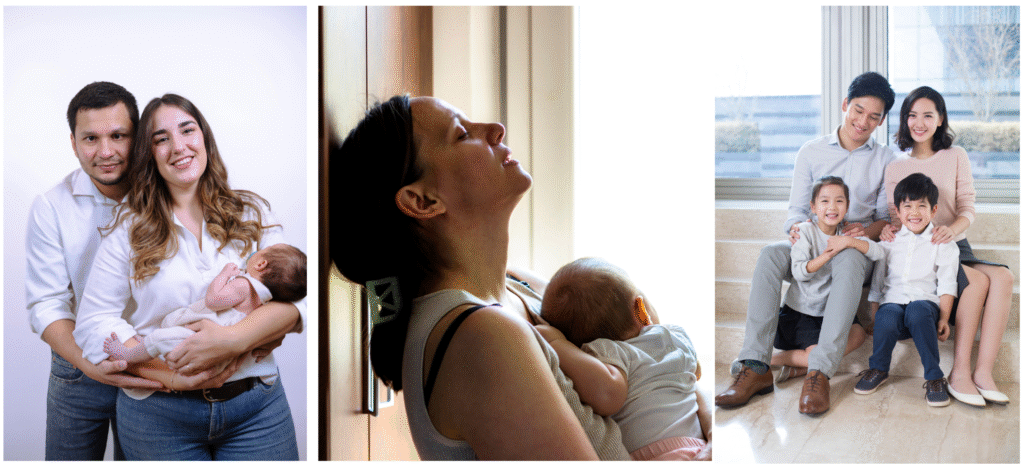
Let me begin with the toughest truth: parents change. And naturally, parenting changes as well.
We like to think of our parents as finished products, but they are works in progress. The parents who welcomed the firstborn are rarely the same people who welcomed the last.
When the first child arrives, parents are often young, fueled by a potent mix of caffeine and anxiety. Everything is a high-stakes “first.” The first fever is a crisis; the first day of school is a milestone of Olympic proportions. These parents are often strict and rule-driven, trying to prove they can “do it right.”
By the time the youngest child arrives, those same parents have been through the fire. They are more experienced, certainly, and perhaps more mellow. They no longer boil the pacifier every time it hits the floor. But they are also older. They might have more patience, but they have less physical stamina. A child born to a 25-year-old father has a “playmate” dad who can chase them for hours; a child born to that same man at 40 has a “mentor” dad who prefers reading on the porch. The love is the same, but the experience of the parent is fundamentally different.
I love all my children equally — of that I am certain. But I have come to understand that equally does not mean the same. Each of them arrived into a different version of our family. Each of them met a different version of me.
And that, I think, is one of the most profound and least-discussed truths of family life: no two siblings ever truly have the same childhood. Not even close.
The Weight of Birth Order
Birth order isn’t just a psychological theory; in many cultures, it’s a social identity. Here in Sarawak, the arrival of the first child changes the very language of the family.
For the Ibans, something quietly but meaningfully shifts when the first child is born: the parents are no longer addressed by their own names. They become Apai and Indai (Father and Mother) of the firstborn. The grandparents, too, take on the name of that first grandchild. Identity itself reorganizes around the arrival of the eldest.
This tells you something important about how the eldest child is received. They are, in many ways, the child who made their parents into parents. The first pregnancy, the first birth, the first everything. And with that status comes a particular kind of weight: high expectations, close supervision, and often, a set of responsibilities that the younger siblings never have to carry in quite the same way.
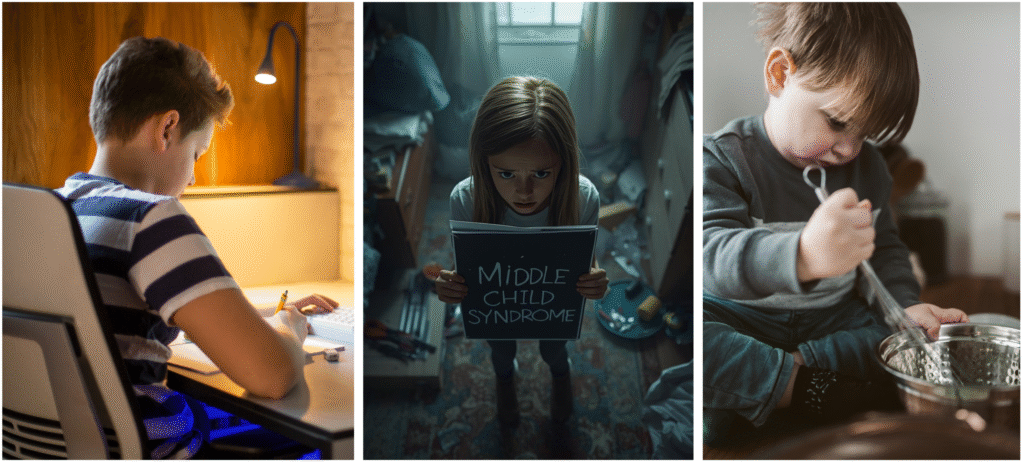
The youngest child is forever the baby. Rules loosen. Deadlines are less enforced. Life is simply a bit softer on the child who arrives last. They are often indulged not out of favoritism, but from exhaustion and the growing understanding that it’s okay to loosen up a little.
Then, there’s the middle child, who often sees themselves as the bridge, without the authority of the oldest or the protected status of the youngest. They need to negotiate for space more actively than their siblings. If the middle child is a girl between two boys, she’s likely to grow into a strong, assertive person, shaped by the effort to establish her own distinct identity within the family.
My middle daughter often says she’s the least loved. Her feelings are real to her, and I understand that her perception is her truth. She arrived at the most challenging times in my life. I was still learning to be a good mother while fighting battles she never knew. Growing up, she had to constantly fight for space. From an early age, she’s learned when to negotiate, compromise, or raise her voice to be noticed. Fortunately, this experience has shaped her into a wonderfully strong woman.
Our eldest will always be special because we carry his name. The youngest will forever be the “baby,” the last one I held in my arms, and I think he will stay that way for a long time.
My daughter, as the only girl, will always be the princess. She’s the one I worry about the most. During her college and university years, I almost daily fretted over her safety, and that concern persists. I worry about how her husband and in-laws treat her and whether she’s succeeding at work. She’s the only one I share my thoughts on makeup and femininity with. Even if my children might not see my love the same way, they each hold a special place in my heart. Every one of them is unique and cherished.
Parenting is one of the toughest jobs. Sometimes the rules of birth order don’t apply.
As a mother, I often take time to understand my child’s temperament and the context before implementing any rules. We weren’t always sure if it would work, but as mothers, we always gave it our all.
Friends, if you’ve retired from parenting, congratulations! Give yourself a well-deserved pat on the back — you’ve survived motherhood
Financial and Emotional Seasons of a Marriage
Then there is the season of the family. We don’t talk enough about how the family’s economic stage dictates a child’s reality.
I hear it often: “We struggled when you were born.” The eldest might remember a small apartment, the tension of unpaid bills, and parents who were emotionally distracted by the sheer weight of survival. Ten years later, the youngest enters a world of comfortable stability, extracurricular lessons, and family vacations. One child learns that the world is a place of scarcity; the other learns it is a place of opportunity.
Major life events such as relocations, career shifts, illnesses, or the loss of a grandparent serve as eras. A child who lived through the divorce years or the grief years has a childhood colored by shadows that a sibling born later never even sees.
Childhood isn’t just shaped by love. It’s shaped by resources, stability, and the family’s stage of life.
Each Child Brings Out a Different Parent
Have you ever noticed how one child can be told “no” and they move on, while another child hears “no” and treats it like a personal heartbreak?
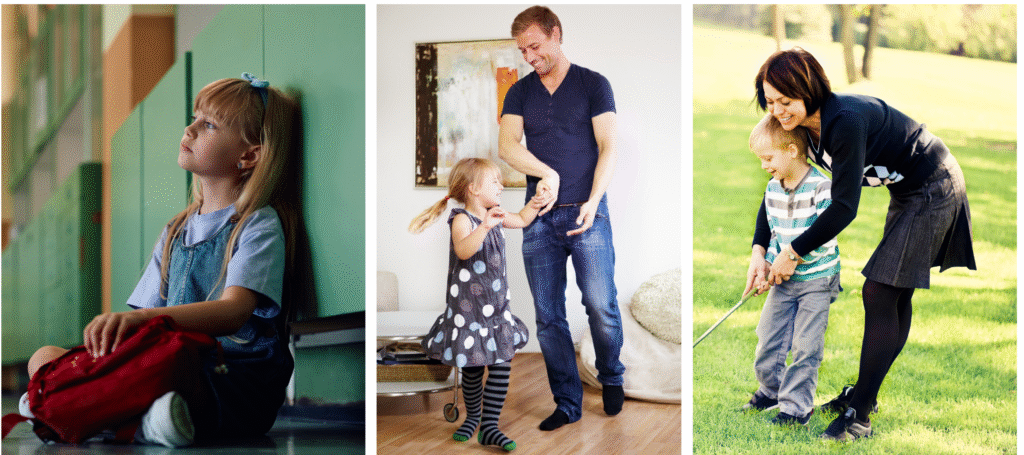
Each child brings out a different side of the parent. We respond to what they evoke in us. A gentle, sensitive child draws out tenderness in a parent. A strong-willed, spirited child draws out, let’s be honest, frustration and also a kind of admiring respect. A child who struggles academically makes a parent show up in ways that a naturally gifted child never requires. I learned that parents can’t use a single parenting rule for all their children.
Each child arrives with their own temperament, their own lens on the world, and their own way of relating to everyone around them. The obedient child and the defiant child are not just experiencing different parenting; they are co-creating different parenting. The family you grow up in is, in part, a family that you helped to make.
And the combination matters too. Having two daughters and a son creates a different family chemistry than having two sons and a daughter. The dynamics shift. The unspoken alliances, the gender conversations, the way a father relates to his only daughter or a mother to her only son. These are subtle forces that shape each child’s experience in ways that are hard to articulate but impossible to ignore.
Sometimes, a parent’s personality just clicks with one child. They share the same sense of humor or the same hobbies. This isn’t about favorites in terms of love; it’s about chemistry. But to the sibling who doesn’t click as easily, it feels like an emotional distance that shapes their entire sense of self-worth.
The World Outside the Front Door
Even when everything inside the home is the same, the world outside is not.
Children a few years apart in age are growing up in measurably different cultural moments. The sibling who entered secondary school before social media is a fundamentally different creature from the one who cannot remember life without a smartphone. A child who was ten during a financial crisis carries that in their body in ways their younger sibling, who was only two at the time, simply does not.
Schools change. Teachers change. The friendships that shape them, the best friend who became a lifeline, the bully who left a scar, the mentor who saw something in them no one else had yet noticed. These are accidents of timing that belong to each child alone. Even attending the same school, no two siblings are really at the same school at all.
The Sibling Ecosystem: The Childhood Within the Childhood
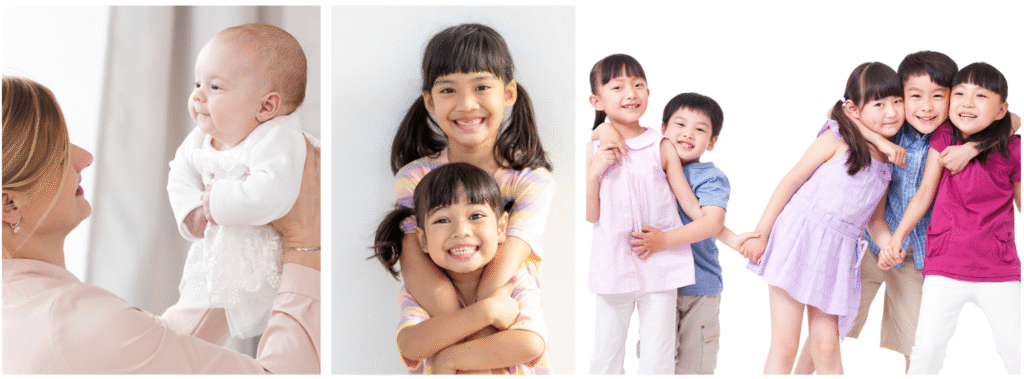
We often think of childhood as being shaped by parents, but siblings shape each other just as profoundly.
An only child for several years experiences something entirely different from a child who has always had siblings. They have their parents’ undivided attention, their own rhythm, their own space. That early period of undivided attention can create a strong sense of security.
When a new child arrives, they join an existing ecosystem. One with its own culture, inside jokes, power structures. With the new arrival, everything shifts, which can deeply impact the first child.
I recall how resentful my oldest son was when the undivided spotlight unexpectedly shifted to his new sister. At around two years old, he already showed signs of envy or displeasure, such as throwing away his sister’s napkin pins (back then, diapers were uncommon) or small items like baby powder.
When more siblings enter the picture, the ecosystem shifts further. Roles form. Dynamics emerge. Older siblings may take on leadership or caregiving roles, while younger ones learn by observing and imitating. Sometimes, siblings become allies. Other times, they become rivals.
A younger child might learn confidence from an older sibling or feel overshadowed by them. An older child might feel a sense of responsibility or resentment.
These relationships create a “childhood within a childhood,” adding another layer to each individual’s experience.
And just like everything else, no two siblings experience these dynamics in quite the same way.
A younger child might learn confidence from an older sibling or feel overshadowed by them. An older child might feel a sense of responsibility or resentment.
These relationships create a “childhood within a childhood,” adding another layer to each individual’s experience.
And just like everything else, no two siblings experience these dynamics in quite the same way.
Memory Isn’t Reality — It’s Personal
Perhaps the most important thing to understand is this: memory is not an objective recording of events. It is a story we tell ourselves, shaped by emotion, perspective, and time.
Two siblings can recall the same moment and describe it in completely different ways. One remembers laughter, another remembers tension. One remembers feeling safe, another remembers feeling unseen. And neither is wrong. They are recalling their version of it, filtered through their age at the time, their particular anxieties and joys, their relationship with each family member that day.
Memory is selective. It highlights certain moments while fading others. It reshapes itself over time, influenced by later experiences and emotions.
Understanding this allows us to hold space for different truths without needing to prove one version right or wrong.
Final Thoughts: A Mother’s Reckoning
I used to think that if I loved my children equally, they would feel equally loved. I used to think that if I treated them fairly, they would experience fairness. I used to believe that childhood was a shared experience, a common roof over common heads.
I know better now.
Love is not the same as experience. Fairness is not the same as sameness. And childhood, even under the same roof, even with the same parents, is never, ever the same for any two siblings.
I cannot go back (I wish I could) and give my middle child the undivided attention she’d craved for. I cannot give my eldest the relaxed patience his youngest brother received. I cannot undo the seasons of financial stress or the exhaustion that made me less present than I wished I had been.
But I can hold this truth gently. I can tell my children that, when they argue about the past, they are all right. That their memories are valid. That their childhoods were different because they were different and because I was different, too.
And I can hope that in understanding this, they might forgive me for the ways I fell short. Might forgive each other for remembering differently. Might understand that a shared roof does not mean a shared experience, and that love, however equal in intention, lands on each child in a shape unique to them.
A Note to My Daughter
To my Princess, if you are reading this: I understand your feelings, being the one in the middle, the one who sometimes gets lost in the shuffle of brothers. But I want you to see yourself through our eyes, too. You aren’t just the middle; you are the heart. The way you effortlessly persuade your father or navigate through a house full of boys with confidence is a unique strength only you possess. As an adult, you are a beacon of strength for me and my best motivator when I’m down. You encouraged me to write my first book and pen my first blog. You even set up the website for me. I thank God for giving me the gift of a precious daughter. Always remember, you will forever be my Princess.
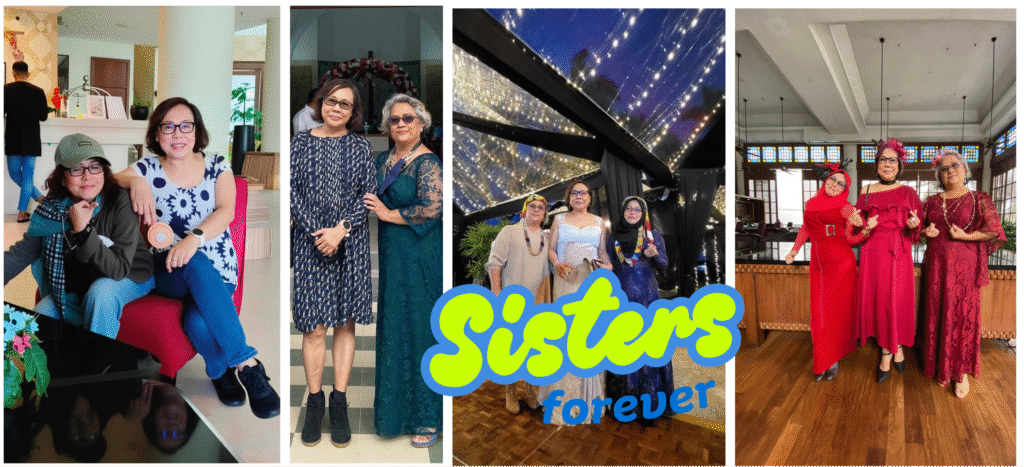
Dear readers, what about you? Have you noticed these differences in your own children? Do you and your siblings tell different stories? I’d love to hear your thoughts in the comments below—your stories are what make this space feel like home.
Thank you for spending a little “after work” time with me. 💛
Stay tuned for the upcoming blog article “10 Facts about Easter Celebration” – arriving on Easter Eve 🫰


“Yeah, second children often feel like they’re the least loved, but in reality, parents love all their children equally.”
Ya, so true.. although they will always think otherwise. Thanks, sis!
Like this article a lot👍
So true..Time, experiences and circumstances does influence me to react and acted differently
Thanks for your comment. Do drop in for more reads on parenting. My next two blogs are “Why teenage daughters are so difficult to raise – A Neuroscientist’s Answer” and “The Quiet Struggles of Teenage Boys: What I Failed to See as a Mother”
With love from
meafterworks