Xīn nián kuài lè, friends! And to my friends in Hong Kong, sun nien fai lok!
If you’ve ever experienced Chinese New Year in Malaysia, you’ll know it’s not just a celebration. It’s practically an entire festive season filled with food, laughter, family gatherings, and meaningful traditions. For many of us, it starts with the annual house cleaning, followed by shopping for new clothes, decorating the home, and eagerly looking forward to reunion dinners.
What makes Chinese New Year in Malaysia so special is how inclusive and joyful it feels. It’s not just about traditions passed down through generations. It’s much more. It’s also about celebrating together as a multicultural society.
While our friends in China, Hong Kong, or Taiwan celebrate with their own customs, we here in Malaysia have developed our own special way of ringing in the Lunar New Year.
So, grab a cup of tea (or a cold beer, I don’t judge), and let’s dive into some interesting facts about the Chinese New Year that I bet many of you might not know. I’ll be sharing how we do things here in Malaysia, from the chaotic fun of tossing Yee Sang to the serious art of giving ang pow.
Here are 10 fun facts that make Chinese New Year in Malaysia truly unique.
1. We Practically Invented the “Prosperity Toss” (Yee Sang)
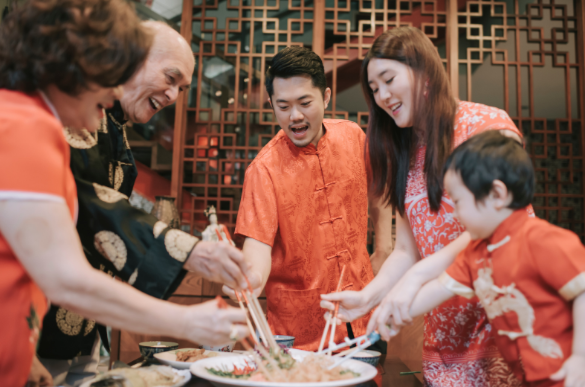
Okay, maybe “invented” is a strong word, but we certainly perfected it! If there’s one thing I miss the most when I’m away during CNY, it’s the ritual of Yee Sang (or Lo Hei). Here’s a fun fact that always surprises my friends overseas: this iconic dish isn’t an ancient Chinese tradition. It’s a modern Malaysian (and Singaporean) creation!
The modern version of Yee Sang, as we know it today, where everyone stands around a huge plate, armed with chopsticks, ready to toss shredded vegetables and raw fish into the stratosphere, actually originated right here. It’s believed to have started in Seremban in the 1940s, inspired by a simpler, raw-fish dish from China. Back then, it was considered a “poor man’s food,” made with simple vegetables from the garden. Now? It’s the star of every reunion lunch and the reason your dining table looks like a confetti bomb went off.
The moment the platter is served, the chaos begins. We all stand up, plunge our chopsticks in, and start tossing the ingredients as high as we possibly can while shouting auspicious phrases. The higher you toss, the better your luck will be! The messier the table, the more prosperity you’re supposedly going to have. It’s loud, it’s messy, and it is absolutely the most fun you can have with a salad.
Here’s another fun fact: during Chinese New Year, especially throughout the first week, many restaurants and eateries across Malaysia offer special Yee Sang set meals. These festive packages are extremely popular and often become social gatherings where friends, colleagues, and even non-Chinese communities come together to celebrate.
In recent years, Yee Sang tossing has also become a favourite activity at office Chinese New Year celebrations. It is a fun and lively way for colleagues to bond, reflect on the past year, and share good wishes for the year ahead. The higher the toss, the greater the prosperity believed to come.
2. Those Yee Sang Ingredients Aren’t Just Salad—They’re Wishes
It’s not just about the toss; every single ingredient on that Yee Sang plate carries a deep meaning. It’s like an edible wishlist for the new year.
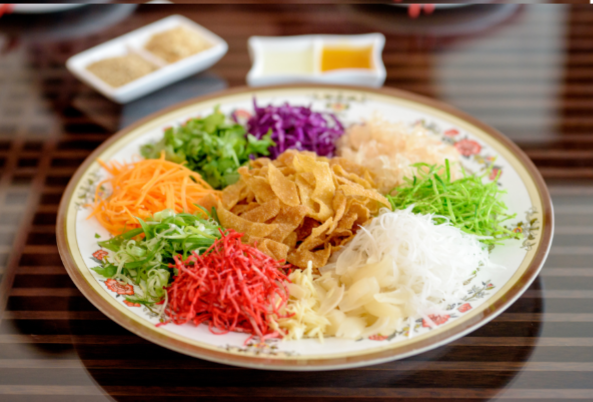
When you pour out the plum sauce, you’re literally bringing sweetness into your life. The golden crackers? Those are gold bars, promising wealth. When you mix in the peanuts, you’re wishing for a long and healthy life, and the sesame seeds symbolize a flourishing business . The raw fish (sang yu) is a big one because it sounds like “abundance” and “increase.” My favourite is the lime, which we spritz into the mix while saying “Tai kat tai lei!” (Cantonese for “good luck upon good luck”). It turns a simple lunch into a heartfelt prayer for the year ahead.
2. Open Houses Reflect Malaysia’s Multicultural Harmony
One of the most heartwarming Malaysian Chinese New Year traditions is the open house. In fact, open houses are widely practised across many Malaysian festivals, including Hari Raya, Christmas, and Gawai. It has become a unique cultural tradition that reflects Malaysia’s strong spirit of unity and inclusiveness.
For many people, receiving invitations to open houses is one of the most anticipated parts of the celebration. It is a time when friends, relatives, and neighbours visit each other’s homes to share festive meals, snacks, and joyful conversations. Guests are usually treated to special dishes such as curries (each race has its own version), roast meats, traditional dishes, and other homemade delicacies.
This tradition is especially vibrant in East Malaysia, where communities are known for their warm hospitality and close-knit inter-racial relationships. It is not uncommon for entire neighbourhoods to visit one another, strengthening friendships and community bonds during the festive season.
3. Red Packets (Ang Pow) Are Serious Business
Ah, the humble ang pow. Or hong bao. Or just plain “red packet.” For kids (and let’s be honest, some adults who are still single), this is the main event.
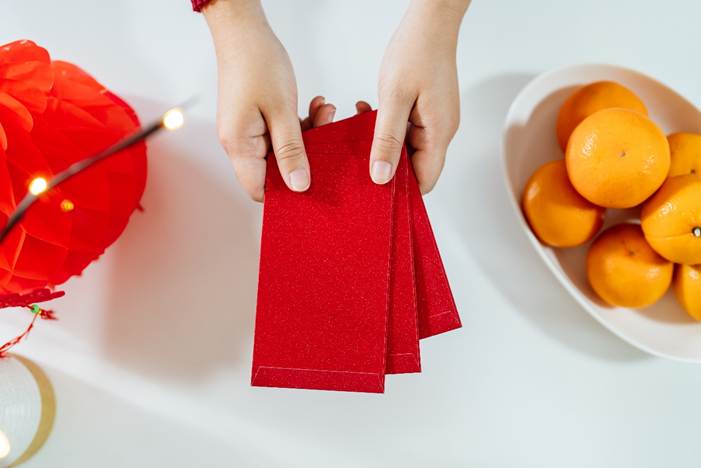
But here’s the thing about Malaysia: giving ang pow isn’t just for family. It’s a widespread social custom. We give them to the children of friends, our neighbours, the guard at our condominium, our regular barista, and the kids of our former schoolmates we bump into at the mall. It’s a way of spreading good fortune to everyone in our community.
The tradition has spread to the Muslim community. During Hari Raya Aidilfitri (or Eid al-Fitr in the Middle East), Muslims in Malaysia give Green packets to young family members or to children who come during open house.
And let’s talk about the preparation. The hunt for crispy, fresh banknotes is a national pastime. Weeks before CNY, you’ll see queues snaking outside banks as people wait to exchange their old notes for brand-new, crisp ones. There’s just something special about the feel of a fresh note in a shiny red envelope. Giving old, crumpled money is bad luck. It means you’re basically giving away “used” fortune. It has to be fresh, symbolising a fresh start.
4. The Dos and Don’ts of Ang Pow Giving
If you’re new to this, take note: there’s a whole etiquette to the red packet.
First, you should always give and receive with both hands. It’s a sign of respect. Don’t just snatch it with one hand and run off to count your loot!
Second, the amount matters. Even numbers are lucky, especially the number 8 (sounds like “fa” meaning wealth). The number 4 is a huge no-no because it sounds like the word for “death.” So, if you’re stuffing ang pows, avoid RM4, RM14, RM40, etc. It’s also customary to put new notes inside. Families always have a stack of RM2 and RM5 notes ready just for the little ones. And for the adults? As one friend put it, “For my parents, it’s about RM500 each. For my daughters, it would be RM50 each. For others, it’s about spreading goodwill”.
5. Red is Everywhere (And It’s to Scare a Monster)
Why are we so obsessed with the colour red? You’ll see it everywhere. From the cheongsam and samfu people wear to the lanterns hanging outside shophouses and the decorations in the mall.
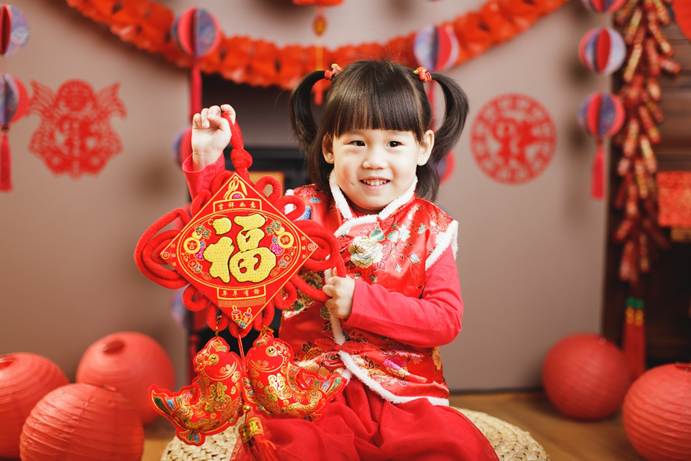
The story goes back to a mythical beast called Nian (which is also the word for “year”). Legend has it that Nian would come out on the last day of the year to terrorise villagers. The villagers eventually discovered that the beast was afraid of the colour red and loud noises. So now, we wear red, put up red couplets on our doors, and set off firecrackers (where allowed) to keep the bad juju away. I have relatives who converted to Islam but still make sure their kids wear red when visiting during Chinese New Year because “it’s a must”. It’s a tradition that transcends religion and brings us all together.
6. The Great Cleaning (And the Great No-Cleaning Rule)
In the days leading up to New Year, you’ll see families doing “spring cleaning” with a vengeance. We’re sweeping, mopping, and dusting every corner of the house. Repainting. Repairing. The whole enchilada! This isn’t just about hygiene; it’s symbolic. We’re sweeping away the bad luck of the old year to make room for the good fortune of the new one.
But…and this is a big BUT. Once the clock strikes midnight on New Year’s Eve, the brooms and dustpans have to be hidden away. On New Year’s Day itself, you are absolutely forbidden from sweeping or taking out the trash. Why? Because you might accidentally sweep away the new year’s luck that has just arrived! You don’t want to be the one who cleans the prosperity out the door.
7. Don’t Wear Black or White
This is one of those “don’t” rules that many fashion-conscious youngsters struggle with every year. In Chinese culture, black and white are colours associated with mourning and funerals. Wearing them to someone’s house during CNY is a major faux pas. It’s like showing up to a wedding in a funeral outfit.
So, when you’re picking out your baju raya, I mean, your CNY outfit, stick to bright, happy colours. Red is best, but pink, gold, orange, and even bright blues and greens are perfectly acceptable. The goal is to look as festive and positive as possible.
8. We Don’t Just Say “Gong Xi Fa Cai”
Sure, you’ll hear “Gong Xi Fa Cai” (Congratulations and be prosperous) everywhere, but we Malaysians love variety. Depending on the dialect group and the situation, you’ll hear a whole range of greetings.
In Cantonese, you’ll often hear “Sun Nien Fai Lok” (Happy New Year) or “Gong Hey Fat Choy.” And when we’re tossing Yee Sang, the air is filled with the Hokkien chants of “Heng ah! Ong ah! Huat ah!” which roughly translates to “Blessings! Fortune! Prosperity!”. It’s rhythmic, it’s loud, and it just feels right.
Also, watch your words. Try to avoid any negative language or words associated with bad luck. So, no talking about death, sickness, or loss. Keep the conversation light, happy, and full of good vibes.
9. The Reunion Dinner is the Most Important Meal of the Year
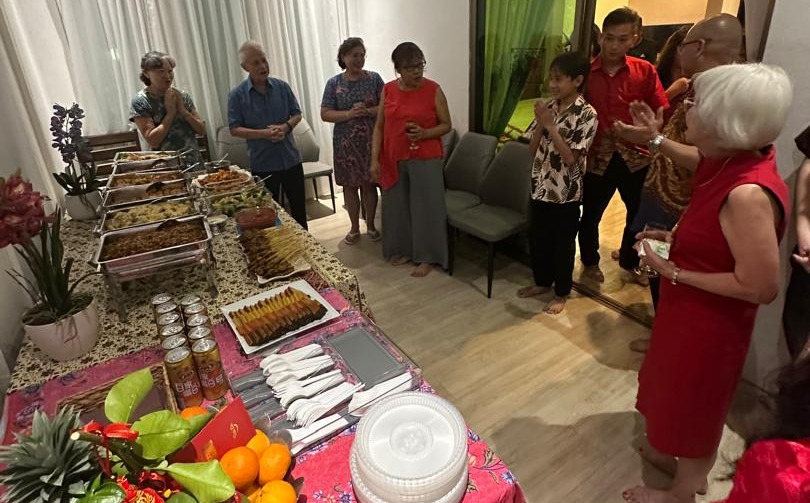
Finally, the heart of it all: the Reunion Dinner on New Year’s Eve. This isn’t just a meal; it’s a homecoming. It’s the one night where family members travel from across the globe just to sit at the same round table.
It’s a feast of symbolic foods. Fish is a must, representing surplus and abundance (you never finish it, leaving some for the new year). Dumplings, shaped like ancient Chinese gold ingots, represent wealth. And then there’s the sticky “Kuih Bakul” (nian gao), a sweet sticky rice cake. Its name sounds like “higher year,” symbolising a better year, a promotion, or a rise in fortunes for the children.
10. Chap Goh Mei: The Grand Finale (and Chinese Valentine’s Day)
The celebrations don’t just stop after Day 1. We go for 15 days, culminating in Chap Goh Mei, which is Hokkien for the 15th night. This marks the final night of the Lunar New Year, and in Malaysia, it’s a pretty big deal. Families gather for another big dinner, and we eat sweet glutinous rice balls that symbolise family togetherness.
It’s often referred to as Chinese Valentine’s Day.
The most romantic tradition takes place in Penang. Unmarried women write their names, wishes, or contact details on mandarin oranges before tossing them into rivers or the sea. Traditionally, eligible bachelors would retrieve the oranges, symbolising the search for a future partner.
Today, this tradition continues as a festive and romantic cultural event. While modern matchmaking apps have replaced orange fishing for many, the ritual remains a beautiful symbol of hope, romance, and destiny.
True to our multicultural spirit, don’t be surprised to see non-Chinese young people joining in the fun.
Final Thoughts
So, there you have it—10 fun facts about how we roll out the red carpet (literally) for Chinese New Year here in Malaysia. It’s a time of noise, colour, food, and family. It’s a time to reconnect with our roots and to share our culture with our friends.
To everyone celebrating, from my family to yours:
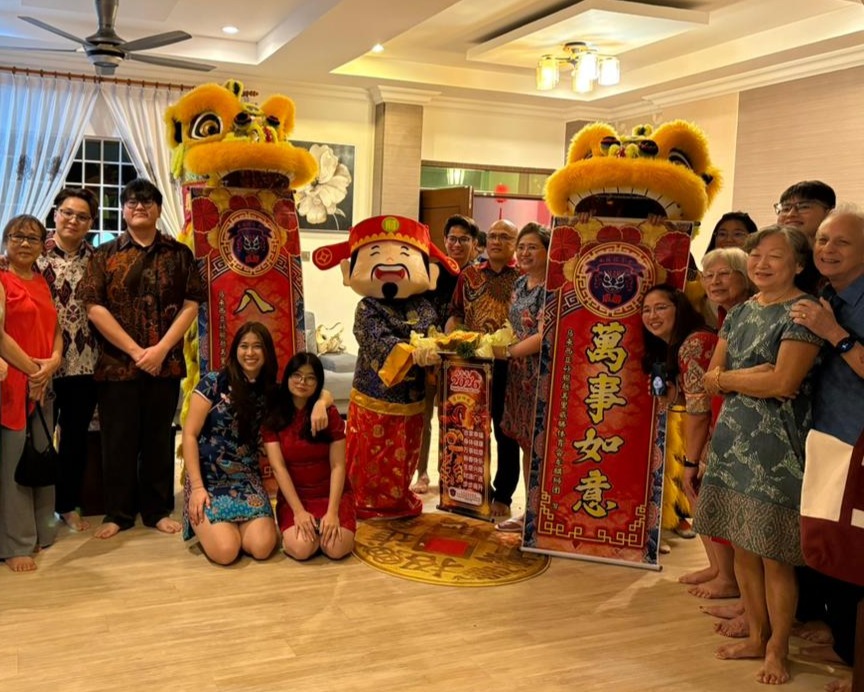
Gong Xi Fa Cai, Gong Hey Fat Choy, and may your year be filled with joy, good health, and prosperity. And remember, when you’re tossing that Yee Sang this year, toss it high and toss it with feeling!
How do you celebrate? Do you have any unique traditions in your family? Share them in the comments below—I’d love to hear them!
Thank you for spending a little “after work” time with me. 💛